
Sample
Like for like
- Utility rebate
- $0
- Federal credit
- $0
- No rebate or federal credit counted: the new units burn gas.
For contractors
Your customer sees the options, the money that applies and what each one costs them, in a form they can take to the people who approve the work.
You keep the customer. What Vandecarb does, and any contact with the owner, is agreed in writing before work starts.
One stuck quote on one system: $500, back in 2 business days.
Sample walkthrough, one minute
A one-minute silent film. It opens on the answer for this sample, then shows the building, then each of the three options on the building's roof with its cost to the owner and its 10-year cost, and the three side by side. It ends by asking the owner to tick an option on the page and reply to their contractor.
The page that goes with it
Each quote gets one page. It sets out every option's installed price, the rebate, the federal credit that may apply, the cost to the owner and the 10-year cost, and it ends with a box where the owner ticks one and replies to you.
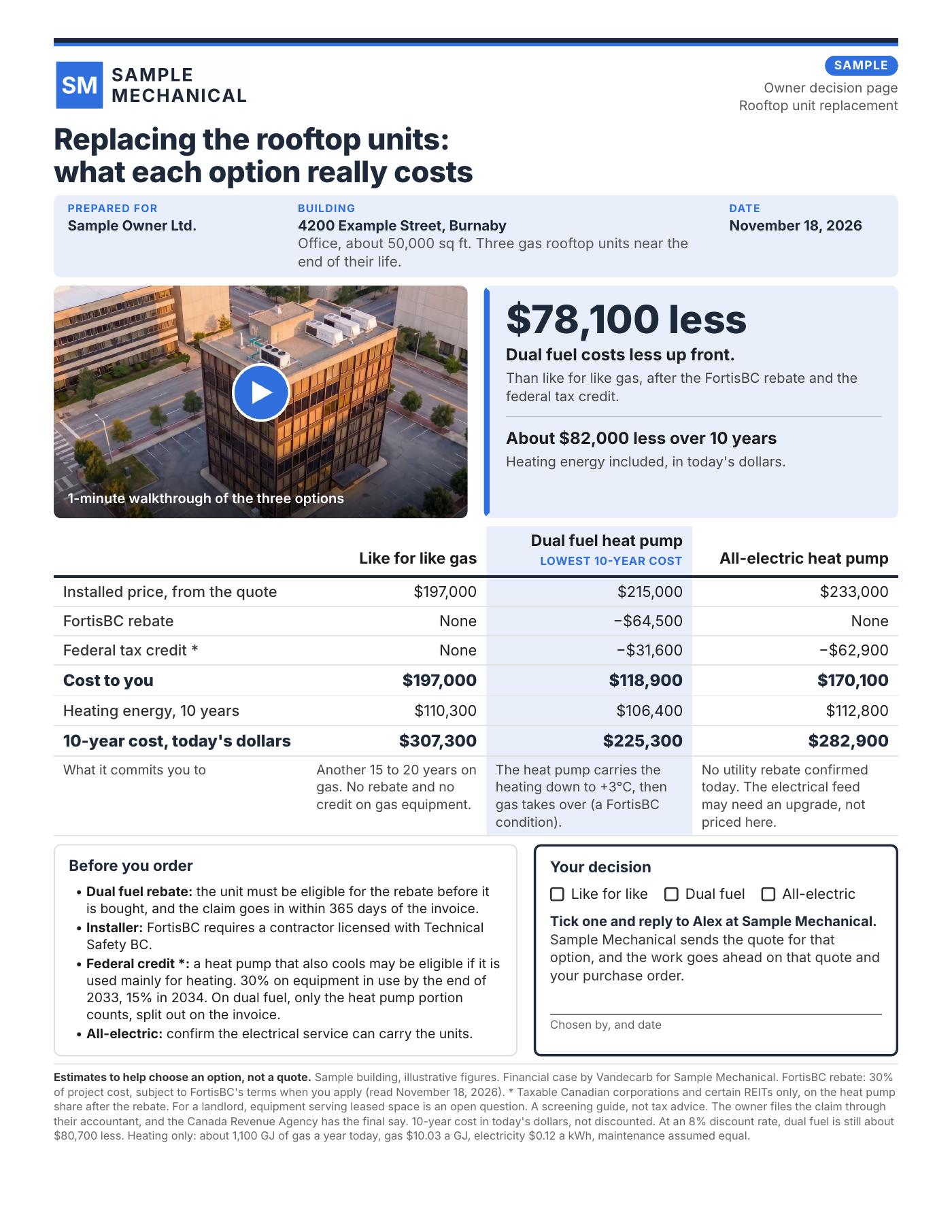
Sample figures on a sample building, under a made-up contractor. Estimates to help choose an option, not a quote.
What you get
Two sizes
A replacement you are quoting now, or one that is out and stuck on price. Rooftop units, a boiler plant, a chiller. Your price beside like for like, with the rebate and any credit worked in.
See the rooftop unit exampleA building you service with several systems coming due. A plan you can bring to the owner before anything fails, with each path costed after the money that applies.
See the sample buildingSample. One system
The sample building's three gas rooftop units are due in two years. Here are three ways to replace them, with the contractor's price and what the owner pays after the money that applies. The building, its costs and its savings are illustrative, and none of it is a quote.
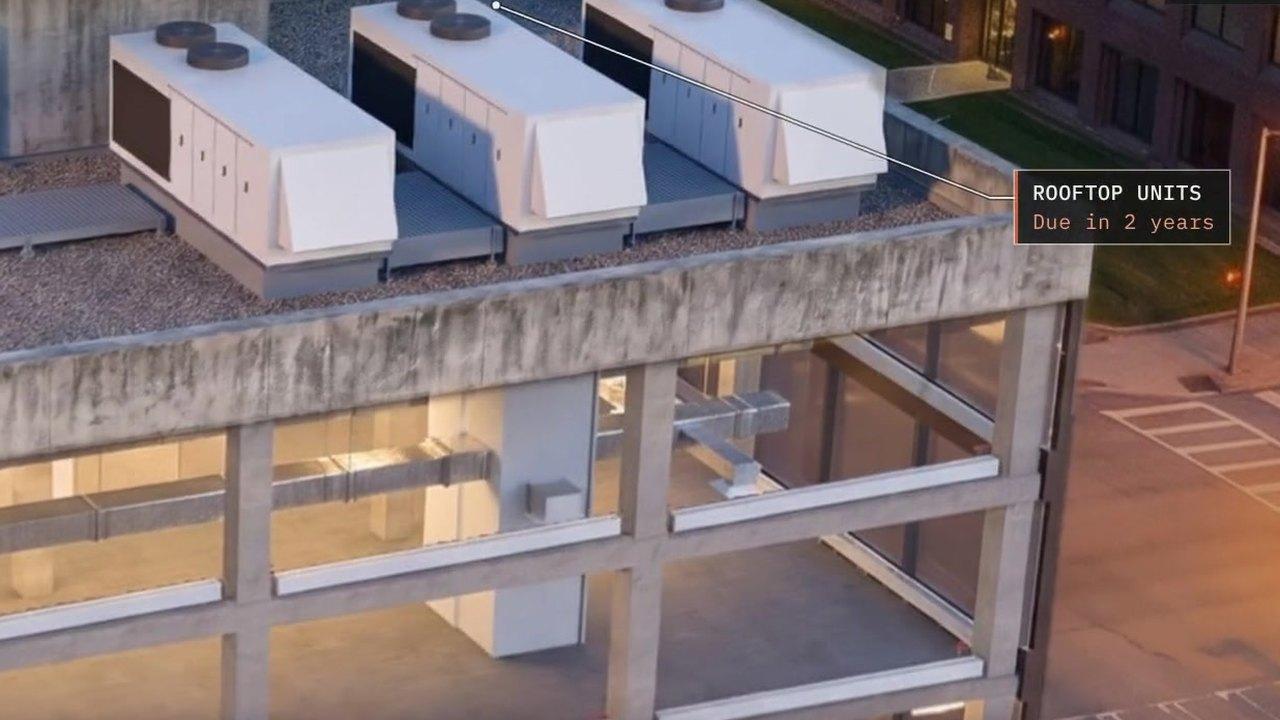
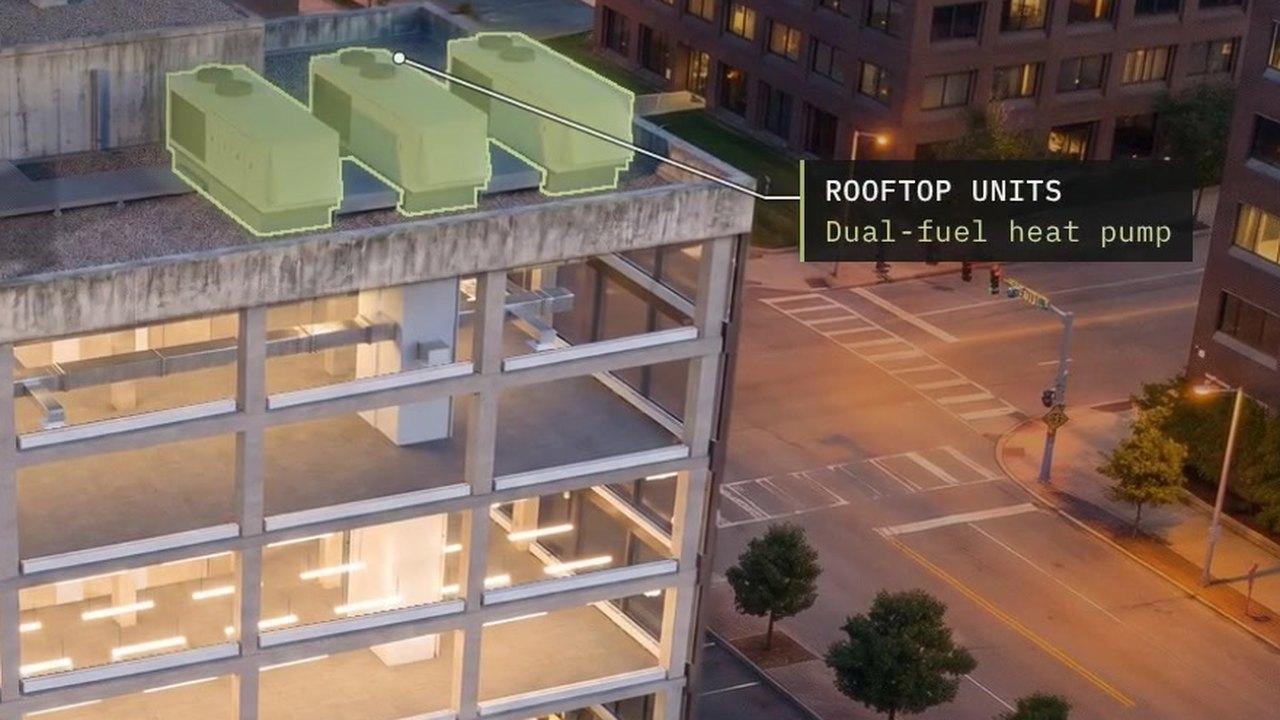
Stills from the sample building film. Illustrative.
In this sample the dual-fuel price is about 9% higher than like for like, and it costs the owner about 40% less after the rebate and the federal credit ($118,900 against $197,000). Where the owner cannot claim the credit it is still about 24% less ($150,500). The all-electric units cost the owner about 14% less with the credit and about 18% more without it. Who owns the building changes the answer, so it is one of the first questions.
Sample. A fictional building, not a quote. Planning-grade costs, good for choosing a direction, not for tender. Like for like is shown at its lowest: its share of the building's controls, start-up and contingency is left out. Rebate terms are as FortisBC's program page stood on November 17, 2026. The federal credit applies to eligible heat pump equipment, less any rebate on it. A heat pump that also cools may be eligible if it is used mainly for heating. On a dual-fuel unit only the heat pump portion can count, only if it is used mainly for heating, and the invoice has to show that portion separately. This sample counts 70% of the dual-fuel units' cost and 90% of the all-electric units' cost as the heat pump share, an assumption set for the sample. The claimant has to be a taxable Canadian corporation, or a mutual fund trust that is a real estate investment trust. A screening guide, not tax advice. The owner files the claim through their accountant, and the Canada Revenue Agency has the final say.
How it works with you
Vandecarb's part is the analysis and how it is shown. The proposal, the price and the relationship stay yours. Any contact between Vandecarb and the owner is agreed with you first.
One line Vandecarb holds: it does not take a contractor engagement on a building where it is advising the owner. If that ever applies, you hear it before any work starts.
Vandecarb does not install or sell equipment, and this is not rebate paperwork. The utilities' contractor programs already help with that. This is the part that shows the owner what the job costs them.
Tell me the job and what your customer has to decide. The first reply is about fit and scope. Paid work is priced in writing before it starts.